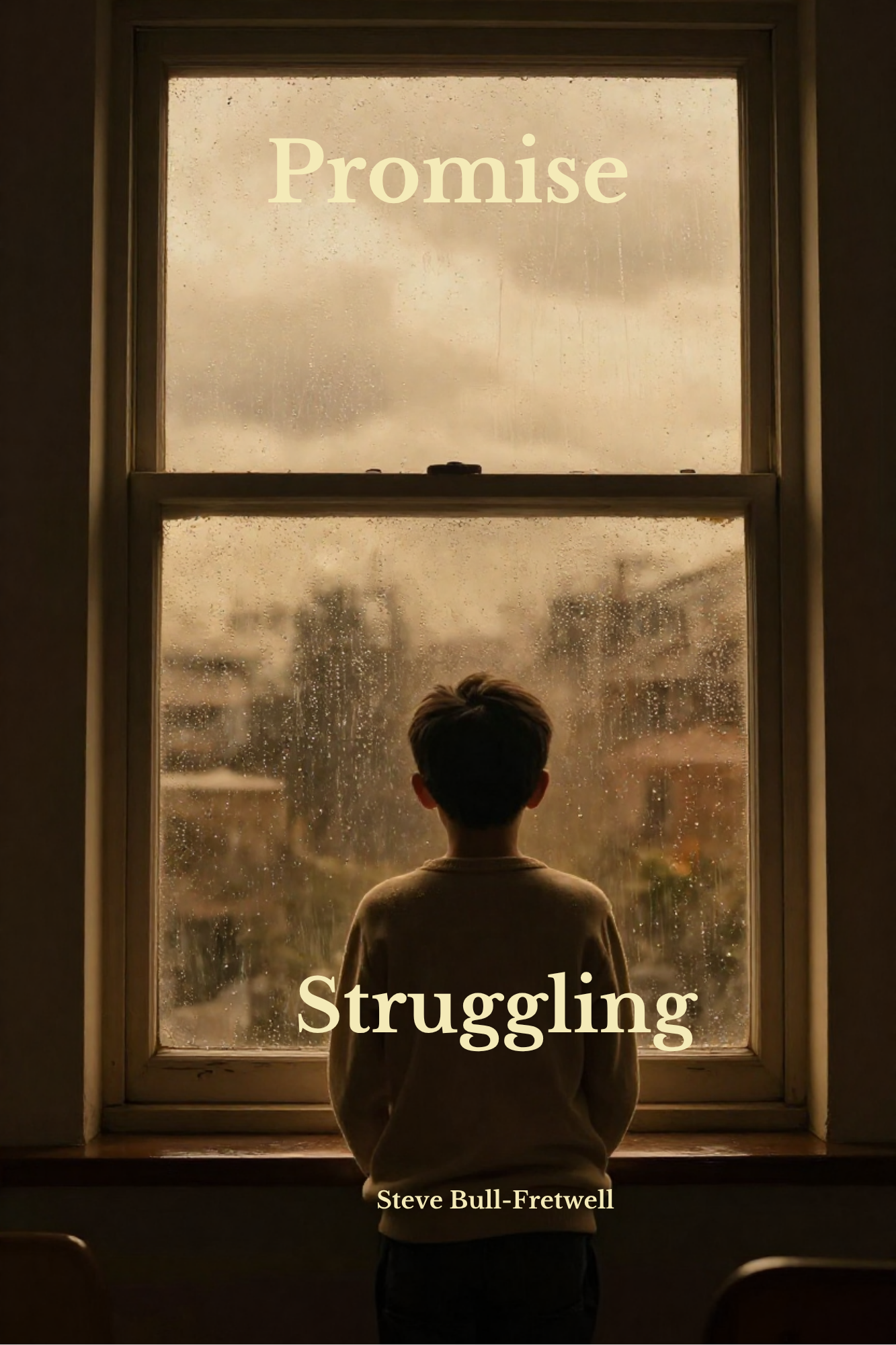
Peter was seven years old when he first understood that something about him didn’t match the world around him. He couldn’t have named it, didn’t have words for the feeling that sat in his chest like a stone—but he knew it the way you know when a shoe doesn’t fit right, even if it’s the correct size.
The Arizona sun beat down on the driveway where his father’s truck sat, its hood propped open like a mouth waiting to be fed. Garry was elbow-deep in the engine, his work shirt was already dark with sweat, though it wasn’t yet nine in the morning. Peter stood beside him on an overturned milk crate, handing over tools when asked, watching his father’s hands move with the kind of certainty Peter wished he felt about anything.
“Socket wrench, Little Boss,” Garry said without looking up.
Peter’s chest swelled. He loved that nickname—loved being included in this world of grease and metal and the particular smell of his father’s garage. He found the wrench and placed it in Garry’s outstretched palm with the solemnity of a surgical assistant.
“That’s my boy,” Garry said, and Peter felt the warmth of it spread through him like honey.
But even here, even in this moment of belonging, Peter felt the gap. The other boys at school—the ones who played kickball at recess, traded baseball cards, and talked about which team would win the World Series—would have known which wrench to grab without looking. They would have asked questions about horsepower and carburetors. Peter just liked being near his father. He liked the rhythm of the work, the way Garry hummed under his breath, and the feeling of being useful. But he didn’t care about the truck itself, not really.
He wondered if his father knew. He wondered if Garry could tell that Peter’s interest was in the togetherness, not the machinery.
“You’re quiet today,” Garry said, glancing over. His face was kind, open. “Something on your mind?”
Peter shook his head. How could he explain that he was always quiet inside, even when he was talking? That there was a whole conversation happening in his head that he could never let out?
“Just thinking,” Peter said.
“Well, don’t think too hard. You’ll hurt yourself.” Garry grinned and ruffled Peter’s hair, leaving a small smudge of grease behind. “Go on and get yourself some water. It’s hotter than blazes out here.”
Peter climbed down from his crate and headed toward the house, but he didn’t go inside. Instead, he sat on the back step and looked out at the yard—the brown grass that never seemed to grow right, the chain-link fence that separated their property from the Johnsons’ next door, and the mountains in the distance that looked purple in the morning light.
He could hear his mother inside, talking on the phone. Anne’s voice was musical, rising and falling with laughter. She was probably talking to Jesse’s mom. They talked every day, sometimes twice. Peter loved that about his mother, the way she made friends feel like family, the way she opened their home to everyone. But sometimes he wondered if she saw him, really saw him, or if she just saw the boy she expected him to be.
Luke certainly didn’t see him. Luke was ten and seemed to Peter like he belonged to a different species entirely. He looked like their mother’s side of the family—black hair, brown skin that tanned even darker in the summer, features that marked him as one of the Garcia clan. Peter was pale, freckled, and unmistakably his father’s son. Sometimes Peter thought that was why Anne loved Luke more. It wasn’t true—he knew it wasn’t true, somewhere deep down—but the feeling persisted anyway, stubborn as a weed.
Luke was probably inside right now, reading or building something or doing whatever it was that Luke did when he wasn’t tormenting Peter. The fights between them had become routine, predictable as the seasons. Luke would say something cutting, Peter would respond, and then Luke’s fists would do the talking. Peter always lost. He was smaller, younger, and less certain of his right to take up space in the world.
But he was learning. Slowly, painfully, he was learning that he couldn’t just fold himself up and disappear, no matter how much easier that might be.
At school on Monday, Peter sat at his desk and watched the clock, waiting for recess. Not because he loved recess—he didn’t, not the way the other kids did—but because it meant he’d see Jesse.
Jesse was the one good thing about school. He lived three houses down, and his mother was Anne’s best friend. He had been Peter’s best friend since before Peter could remember. They’d grown up together, learned to ride bikes together, and spent countless summer afternoons in each other’s yards playing with toy trucks, building elaborate roads in the dirt.
But lately, Peter had noticed something shifting. Jesse still liked all those things, but he also liked the things the other boys liked. He liked kickball, baseball, and football—all the ball games that Peter found tedious and vaguely threatening. Jesse was good at them, too. The other boys wanted him on their teams.
Peter was never picked for teams. He’d learned to make himself invisible during those awful moments when captains chose sides, drifting instead toward the edges of the playground where the girls played hopscotch, jumped rope, and engaged in elaborate imaginary games that actually made sense to him.
The bell rang for recess, and Peter followed the surge of bodies out to the playground. Jesse caught up with him at the door.
“You want to play kickball?” Jesse asked. His face was hopeful, open. He always asked, even though Peter always said no.
“Nah,” Peter said. “You go ahead.”
“You sure? It’ll be fun.”
Peter shrugged. “I’m sure. I’ll see you after.”
Jesse hesitated, and Peter could see him weighing something—loyalty against desire, maybe. But then Tommy Brennan called out, “Jesse! We need you!” and Jesse’s face lit up.
“Okay,” he said. “But let’s ride bikes after school, yeah?”
“Yeah,” Peter said, and he meant it. That was the thing about Jesse—he never made Peter feel bad for being different. He just accepted it, the way you accept that some people like chocolate and some people like vanilla.
Peter watched Jesse run toward the field where the boys were gathering, then turned and walked to the far corner of the playground, where Sarah, Jennifer, and Maria were setting up an elaborate game involving a jump rope and a series of rules Peter didn’t yet understand.
“Can I play?” he asked.
Sarah looked up and smiled. “Sure! You can be the prince who’s been turned into a frog.”
Peter didn’t know what that meant, but he nodded anyway. The girls made room for him in their circle, and for the next twenty minutes, Peter was a frog-prince who had to hop around and say “ribbit” at specific intervals while the girls—who were apparently princesses and also witches—tried to break the spell.
It was silly. It was fun. It made more sense to Peter than any ball game ever had.
But he could feel the eyes on him. The other boys glanced over from their game before quickly looking away. Marcus wasn’t so subtle; he caught Peter’s eye and smirked before turning back toward the kickball field.
Peter felt the familiar weight settle in his chest—the sense that he was doing something wrong, even though he wasn’t hurting anyone. Somehow, being here and laughing with the girls felt like a betrayal of something he was supposed to be. He didn’t understand it. He just felt it, heavy and confusing, like trying to breathe underwater.
That afternoon, Peter and Jesse rode their bikes down to the empty lot at the end of the street. It was their place and had been for years—a stretch of desert scrub where they could ride in circles, build jumps out of scrap wood, and pretend they were anywhere but here.
Jesse was talking about the kickball game, about how he’d scored the winning run, and Peter listened and made the right noises of appreciation. He was genuinely happy for Jesse. That was the strange thing—he didn’t want to like kickball and didn’t feel like he was missing out. He just wanted Jesse to be happy.
“You should play sometime,” Jesse said, not for the first time. “You might like it.”
“Maybe,” Peter said, knowing he wouldn’t.
They rode in silence for a while, the only sound the crunch of tires on dirt and their own rhythmic breathing. The sun was starting to sink toward the mountains, turning the sky orange and pink.
“Do you ever feel like…” Peter started, then stopped.
“Like what?”
Peter didn’t know how to finish the sentence. Like you don’t fit? Like everyone else knows something he didn’t? Like, there’s something wrong with you that you can’t see, but everyone else can?
“Nothing,” Peter said. “Never mind.”
Jesse didn’t push. That was another thing Peter loved about Jesse, he knew when to let things go.
They rode until the streetlights came on and their mothers called them home for dinner. Peter pedaled slowly, reluctant to return to the house where Luke would be waiting, where his parents would ask about his day, and he’d have to pretend everything was fine.
Because it was fine, wasn’t it? He had a father who loved him, a mother who cared for him, and a best friend who accepted him. He had a home, food, a bike, and all the things a seven-year-old was supposed to want.
So why did he feel so alone? Why couldn’t he make anyone see what he was feeling?
Peter didn’t have answers. He just had the feeling, persistent and undeniable, that he was different in a way that mattered. He was seven years old, and already he was learning to hide.
The stone in his chest grew a little heavier as he pedaled home through the gathering dark.
Some journeys stay with us long after the final page. Peter’s is just beginning. If Peter’s story has found a place in your heart, Continue the journey.
Continue Peter’s JourneyAvailable now on Amazon