There Is More than One Way to Belong
There are words we use so often that we sometimes forget how much they mean. Home. Family. Love. Belonging. We tend to imagine each of them in familiar ways. Home is the house where we live. Family is the group of people connected to us by blood or marriage. Love is something shared between the people closest to us. Belonging means finding the place where we fit.
Somewhere along the way, family becomes larger than the people who share our name.
There are words we use so often that we sometimes forget how much they mean.
Home. Family. Love. Belonging.
We tend to imagine each of them in familiar ways. Home is the house where we live. Family is the group of people connected to us by blood or marriage. Love is something shared between the people closest to us. Belonging means finding the place where we fit.
But life has a wonderful habit of making those definitions larger.
A friend becomes a brother. A neighbor becomes the person who never misses a birthday. Two people who were once strangers build a life together. Children grow up surrounded by people they call family even though no family tree could explain exactly how everyone is connected.
And sometimes a story that began in one language discovers that it can belong to people who speak another.
Maybe belonging was never about being the same in the first place.
The Families We Are Given and the Families We Build
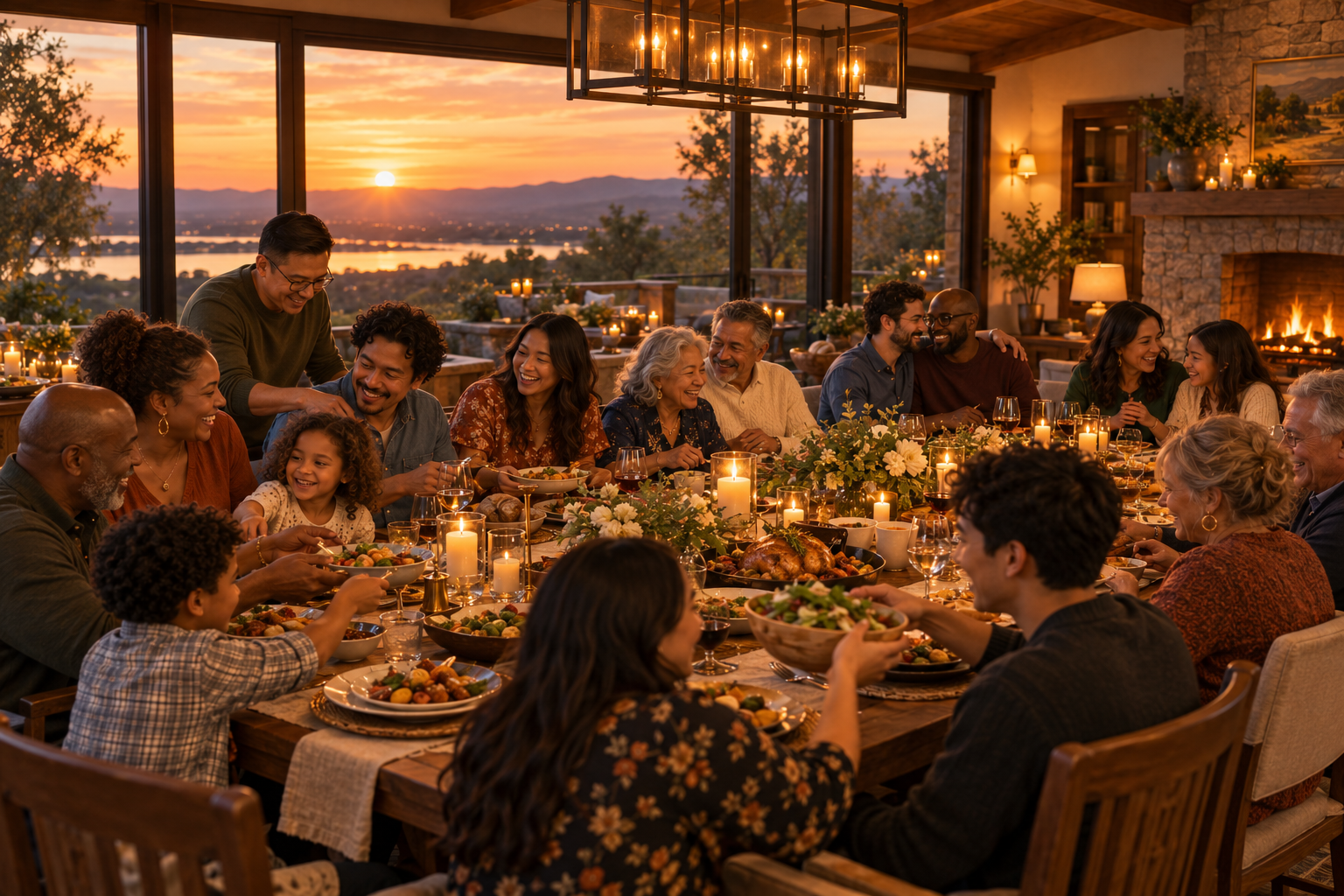
We don't choose the family into which we're born. Those relationships arrive before we have any understanding of what family means. They give us our earliest experiences of love, conflict, loyalty, disappointment, laughter, responsibility, and forgiveness.
Those bonds can be extraordinarily powerful. They can also be complicated. Anyone who has lived long enough knows that sharing blood doesn't guarantee understanding, and not sharing it doesn't prevent two people from loving one another as deeply as any relatives ever could.
As our lives expand, so does the meaning of family.
We meet people at school, at work, in neighborhoods, churches, communities, and places we never expected to be. Some remain acquaintances. Others become friends. And every once in a while, someone crosses an invisible line that nobody formally acknowledges.
They're no longer simply a friend.
They're one of us.
They have a chair at the table. They know the stories. They remember who we used to be. They celebrate who we've become. When something wonderful happens, they're among the first people we want to tell. When something terrible happens, we know they'll answer the phone.
No certificate declares the relationship. No shared last name is required.
We simply chose one another.
Different Doesn't Mean Distant
The world gives us plenty of reasons to notice the things that make us different.
We come from different countries. We speak different languages. Our skin is different colors. We worship differently, love differently, build families differently, and carry histories that are uniquely our own.
Those differences matter. They shouldn't be erased or politely ignored. They are part of who we are.
But difference doesn't have to create distance.
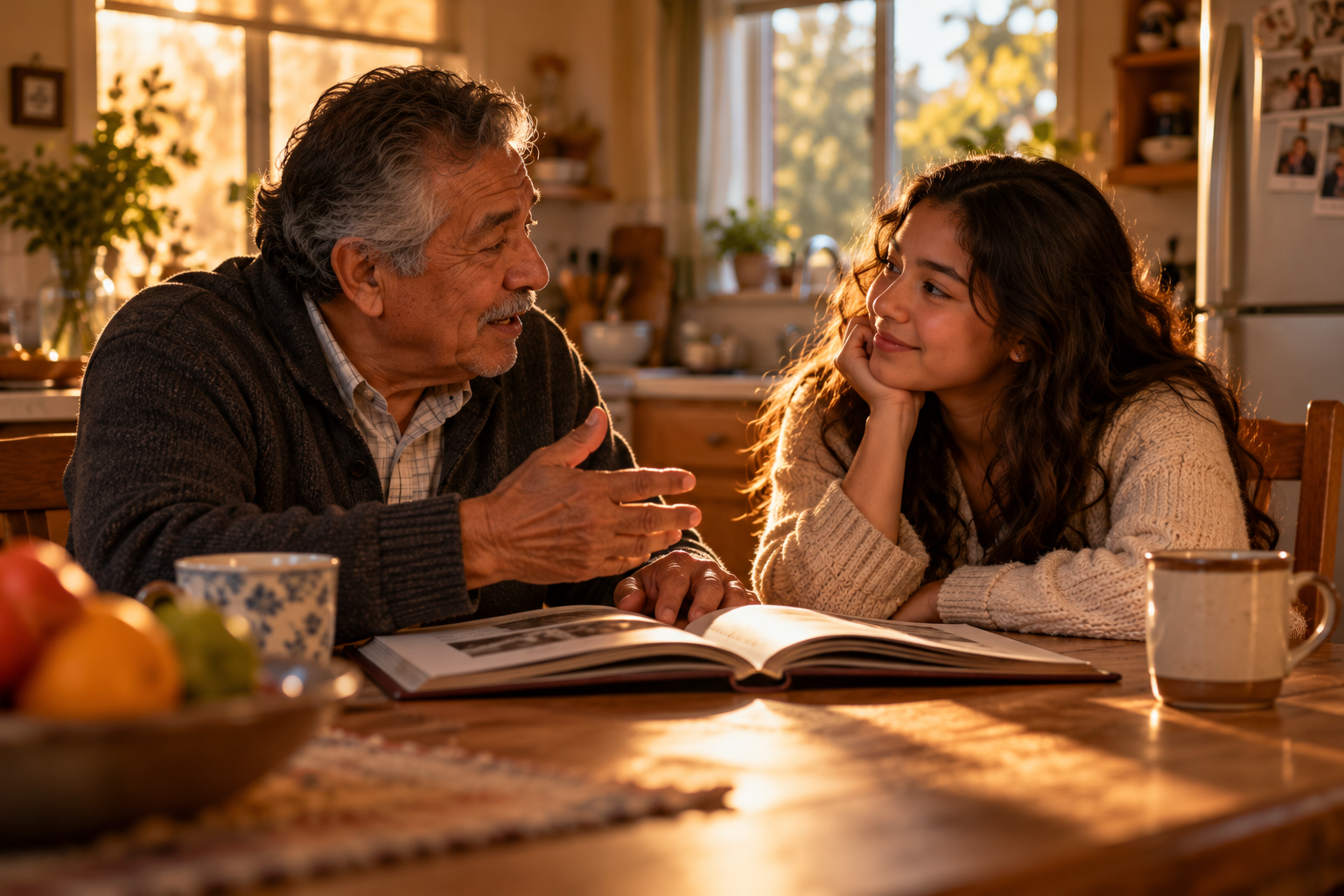
Sit long enough at a table with people whose lives look nothing like yours and eventually someone will tell a story that sounds remarkably familiar.
A mother worries about her child.
A grandfather tells the same story for the hundredth time.
Someone falls in love and wonders whether that love will last.
A teenager struggles to understand who they're becoming.
Someone loses a person they thought would always be there.
Someone else discovers a friendship they never expected.
We laugh. We grieve. We hope. We disappoint one another. We forgive. We try again.
The details change.
The humanity doesn't.
Peter's Table Keeps Getting Larger
That idea lives at the heart of the Promise Trilogy.
Peter begins his journey as a boy carrying a promise to his mother and trying to take care of the people he believes are his responsibility. For a long time, family and obligation become almost impossible for him to separate.
But Peter's understanding of family changes as he does.
People enter his life who owe him nothing and choose him anyway. Some challenge him. Some encourage him. Some love him. Some become part of his life for a season, while others remain for decades.
Eventually, Peter learns that family isn't diminished when we allow more people into it.
It grows.
There is room for the family we were born into and the family we discover along the way. There is room for old relationships and new ones. There is room for people who look like us and people who don't, people who love as we do and people whose lives have followed completely different paths.
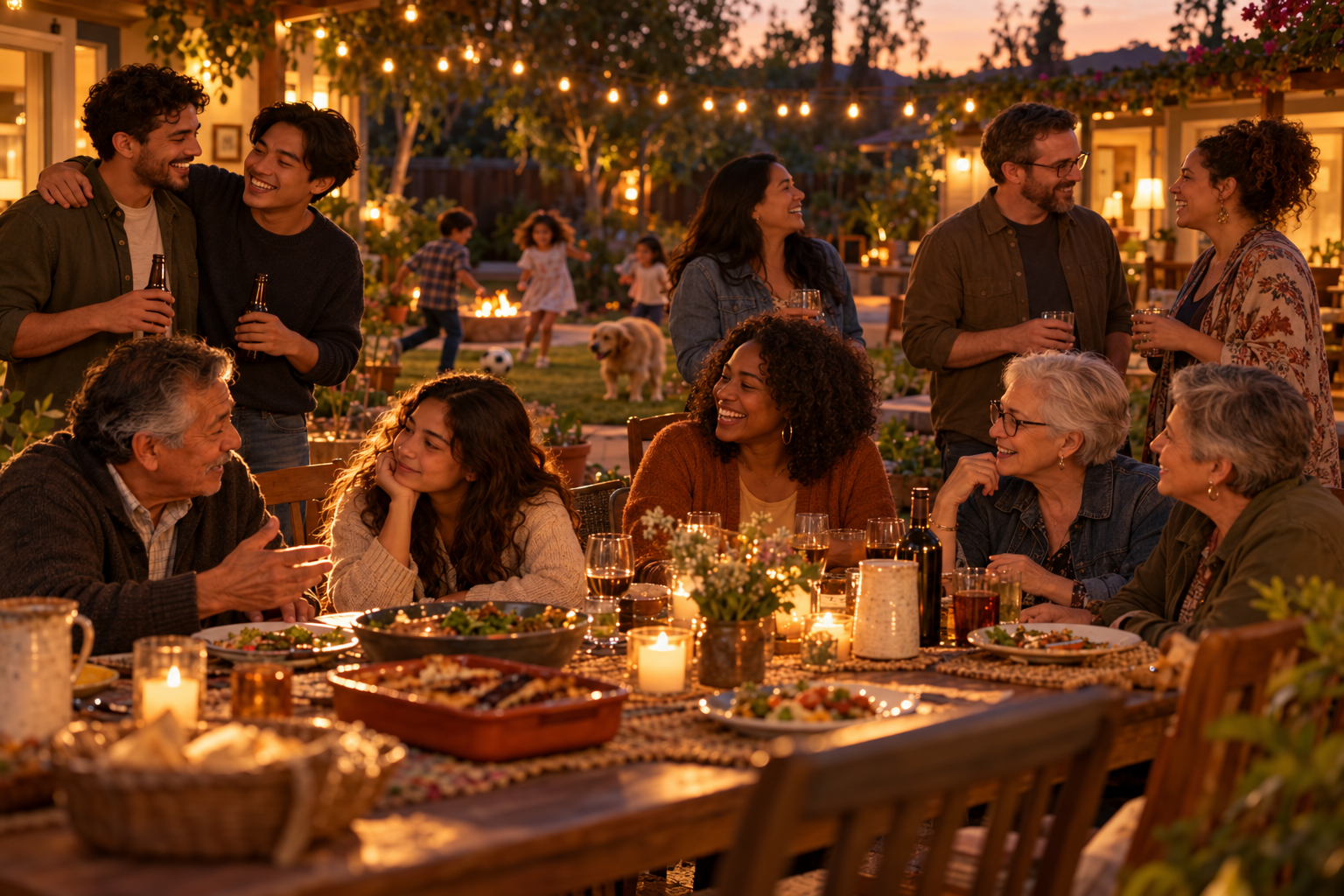
The table doesn't become less meaningful when another chair is added.
It becomes more complete.
When a Story Learns Another Language
I've been thinking about belonging in a different way lately because something is about to change for the Promise Trilogy.
Until now, Peter has spoken to readers in English.
That is about to change.
Later this month, the website will open its doors in Spanish. The Spanish version of the Promise Trilogy trailer will follow, and then the three Spanish editions will begin their release.
After that, Peter's journey will continue into more languages over the coming year.
There is something deeply meaningful to me about that.
Peter's story began in a particular place, in a particular time, with a particular family. Translating it doesn't change any of those things. Idaho remains Idaho. Peter remains Peter. His mother is still Anne. His promise still carries the same weight.
But someone who might never have chosen to read his story in English will soon be able to meet him in Spanish. Later, another reader will meet him in Portuguese. Another in German. Another in French.
They may live thousands of miles from the places Peter knew.
And yet they may recognize him.
Not because their lives are identical to his, but because perhaps they, too, have carried a responsibility that became heavier than anyone realized. Perhaps they've wondered where they belonged. Perhaps they've hidden part of themselves because they feared what would happen if people knew the truth. Perhaps they've found family in someone they never expected to meet.
Those experiences don't belong to one country.
They don't belong to one race, one gender, one orientation, one kind of family, or one language.
They belong to people.

An Open Door
I don't want the world of Promise to look like everyone in it came from the same place, because that isn't the world I believe in and it isn't what chosen family means.
Chosen family is expansive.
It is the gay couple who have built a life together and the straight couple sitting beside them. It is the Black grandmother passing a dish to the Latino teenager who has heard her stories so many times he can finish them himself. It is the Asian friend who stopped being introduced as a friend years ago because everyone simply knows she belongs. It is children growing up surrounded by adults whose relationships they don't need explained to them.
It is people bringing their histories, cultures, languages, loves, traditions, mistakes, and dreams to the same table without surrendering the things that make them different.
Nobody has to become someone else before they're allowed to sit down.
There's already a place waiting.
Perhaps that's what I hope happens as Peter's journey begins traveling farther from the place where it started.
I hope someone new opens the door.
I hope they recognize something inside.
And I hope, for a little while, they feel at home.
A story doesn't become less itself when it learns to speak another language. It simply opens the door and invites someone new inside.
Welcome.
There's room for you here.
— Steve Bull-Fretwell